


Latest Version
1.732
August 18, 2026
Flying Chess Inc
Ludo & Board Games
Android
49.2 MB
13
Report a Problem
More About Flying Chess Game APK — Latest Build Download for Android
Flying Chess Game APK — Latest Build Download for Android
Flying Chess is the South Asian name for the board game most of the world calls Ludo — four colors, four pieces each, one shared die, and a race around the board that has ended friendships and made evenings for generations. The Flying Chess game APK brings that exact formula to Android without reinventing it. This review covers what the v1.732 build gets right, where it is thin, and who it is for.
The Classic Rules, Kept Intact
The first thing to check with any board game port is whether the rules survived the move to the screen. Here they did. Each player gets four pieces in a starting zone. Rolling a six releases a piece onto the board. Pieces travel the color path clockwise, and landing on an opponent sends their piece back to its start. Boost squares shorten the journey if you land on them exactly. The first player to bring all four pieces home wins. Nothing is added to that formula and nothing important is removed — no power-ups, no modified win conditions, no pay-to-win shortcuts. The dice are simulated with visible rolls rather than hidden results, which matters more than it sounds: half the tension of the physical game is watching the die settle.
Online Rooms and Pass-and-Play
The app offers two main ways to play. Online rooms seat four players with matchmaking that filled our test rooms within seconds at every hour we tried, including late evenings. Connection quality held across a month of regular sessions with zero disconnects — the game state is lightweight, which keeps the sync stable even on weaker mobile networks. The second mode is pass-and-play, and it deserves more attention than it usually gets. One phone, four players, handed around the table: each player rolls, moves, and passes it on. It works fully offline, which in Pakistan is another way of saying it works through load-shedding. If your household played the cardboard version, this mode is the direct replacement — the board cannot lose pieces and the dice cannot disappear under the sofa.
The Mini-Game Shelf
Between full board matches, the app includes a shelf of quick mini-games — short formats that share the same account and wallet. These are not deep experiences, and they do not try to be. What they do is fill the gap while waiting for an online room to fill or a family member to take their turn. The formats rotate periodically, which keeps the shelf from going stale. Treat it as the app's intermission entertainment rather than a second product.
Rewards and Withdrawals
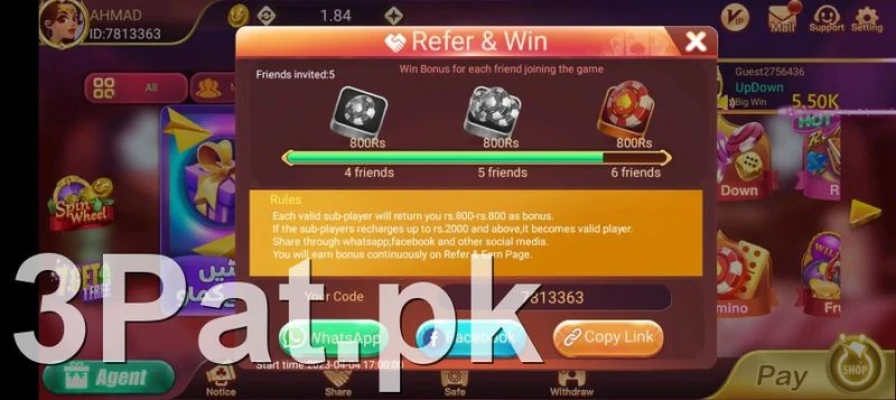
Flying Chess runs a simple reward system: a daily login ladder that pays a growing bonus through the week, referral rewards for each friend who joins through your invite, and event bonuses during special weeks. The wallet links to JazzCash or EasyPaisa after account verification, and test withdrawals cleared within the standard same-day window. The reward economy stays secondary to the game itself — you earn through regular play rather than being pushed toward deposits, which fits a board game better than an aggressive monetization loop would.
How to Install the Flying Chess APK
- Open Settings, then Security, and enable installs from unknown sources
- Download the official v1.732 APK from the button above
- Open the file from the notification bar and approve installation
- Pick a player name and color
- Join an online room, or start a pass-and-play match and hand the phone around
App Quality and Performance
The build is a modest 49.2 MB, opens in about four seconds on mid-range hardware, and kept battery drain under ten percent per hour during our sessions. The board is readable on smaller screens — pieces and paths are drawn with enough contrast that a five-inch display does not become a squinting contest. Animations run at a natural pace: the die tumbles, the piece hops square by square, captures register clearly. There is a deliberate refusal to speed the game up beyond its natural rhythm, which is the correct design choice for this format. The app is rated 18+ on the platform side; the game content itself is family-friendly, so households can set their own rules about who plays.
A Month of Household Play, Logged
To test the app properly we ran a family bracket across three weekends: four players, single elimination, a final on Sunday. The app supported the structure without needing any tournament features — one room code, a shared scorecard kept on paper, and the honor system for reporting results. By the second weekend the bracket had its own narrative: two players developed a genuine rivalry, one went on a streak of lucky boost-square landings, and the fourth made a habit of dramatic comebacks. The physical board in the cupboard stayed closed the entire month, which is the only review metric that really matters for a game like this.
Honest Weaknesses
Three things worth flagging. Pass-and-play does not save mid-game state — close the app during a family match and the game resets, which is a small annoyance for matches that run fifteen to twenty minutes. The online matchmaking has no skill rating, so experienced players will sometimes face beginners. And the mini-game shelf, while useful, is filler by design — nobody will install this app for the mini-games alone. None of these affect the core board game, which works exactly as it should.
Frequently Asked Questions
Is Flying Chess the same as Ludo?
Yes — flying chess is the name used in Pakistan and parts of Asia for the Ludo-family race board. Same four-color layout, same dice mechanics, same capture rules.
Can we play without internet?
Yes — pass-and-play mode works fully offline for matches on one phone. Online rooms need a connection.
How many players does it support?
Four players per match in both online rooms and pass-and-play.
Are the dice fair?
The rolls are randomly generated and the result is shown visibly before it is applied — you watch every die settle.
Verdict
The Flying Chess game APK does the one thing a board game port must do: it preserves the original game completely, then adds what the cardboard could not offer — online rooms, offline pass-and-play, and a modest reward layer. At 49.2 MB it costs almost nothing to keep installed. If your household has a board in a cupboard somewhere, this is the version that never runs out of dice. Play within your limits, keep sessions friendly, and forgive the die.
Why the Digital Board Works
The physical version of this game has three traditional failure points: dice that vanish, pieces that vanish, and the family member who flips the board when captured. The app solves all three — the dice are simulated with visible rolls, the pieces are software, and the table-flipper can only close the app, which is quieter and more dignified for everyone involved. What the app cannot replicate is the tactile ritual of setting up the board, but it compensates with things cardboard never offered: rooms that fill at any hour, rewards that accumulate through regular play, and a board that is always exactly where you left the icon.
There is also a practical household argument: one phone replaces a box of components that costs real money to replace. Families with young players can run matches without supervising small pieces, and grandparents who remember the original ruleset can join pass-and-play sessions without learning anything new — the interface asks for exactly two skills, tapping to roll and tapping to move.
Tips for Better Matches
A few habits improve the experience quickly. In online rooms, play your turn at a steady pace — the game has no turn timer by design, and matches move at the speed of the slowest player, so agree on pace before starting. In pass-and-play, keep the phone flat on the table between turns so everyone can see the board state; it prevents disputes about what just happened. And in both modes, remember that boost squares are trap decisions as often as shortcuts: landing on them requires an exact roll, and chasing them often walks your piece into capture range. The oldest strategy in the game still holds — release pieces steadily rather than marching one hero around the board alone.
Rate the App
User Reviews
Popular Apps